NÉHÁNY SZÓT A FESTŐMŰVÉSZRŐL

Mindkettőnk családjában
hagyománya van a művészetek művelésének (festészet, kerámia,
szobrászat). Véletlenül fordultunk az ikonok felé. 1989-ben
egy képkereskedésben olyan érdeklődéssel nézegettük az
ikonokat, hogy a tulajdonos felfigyelt ránk és bíztatott,
fessünk valamit, és ő megpróbálja eladni. A kezdet nehéz
volt, ugyanis mindent autodidakta módon sajátítottunk el
szakkönyvek alapján. Előfordult, hogy a kész kép egyszerűen
lepotyogott, mert az alapozás nem volt tökéletes. Az
aranyozás módszerét is hosszú gyakorlás során tanultuk ki.
Szerencsére az eladó megértő és türelmes volt.
Manufaktúraszerű munkamegosztással dolgozunk. A férjem
rajzolja és festi a képeket, én tervezem meg, hogy fog
kinézni az ikon, bár ezt közösen is megvitatjuk. Az én
munkám még a rátétek készítése (mintázás, formakészítés,
öntés) és az aranyozás. Ennyi idő alatt kialakult
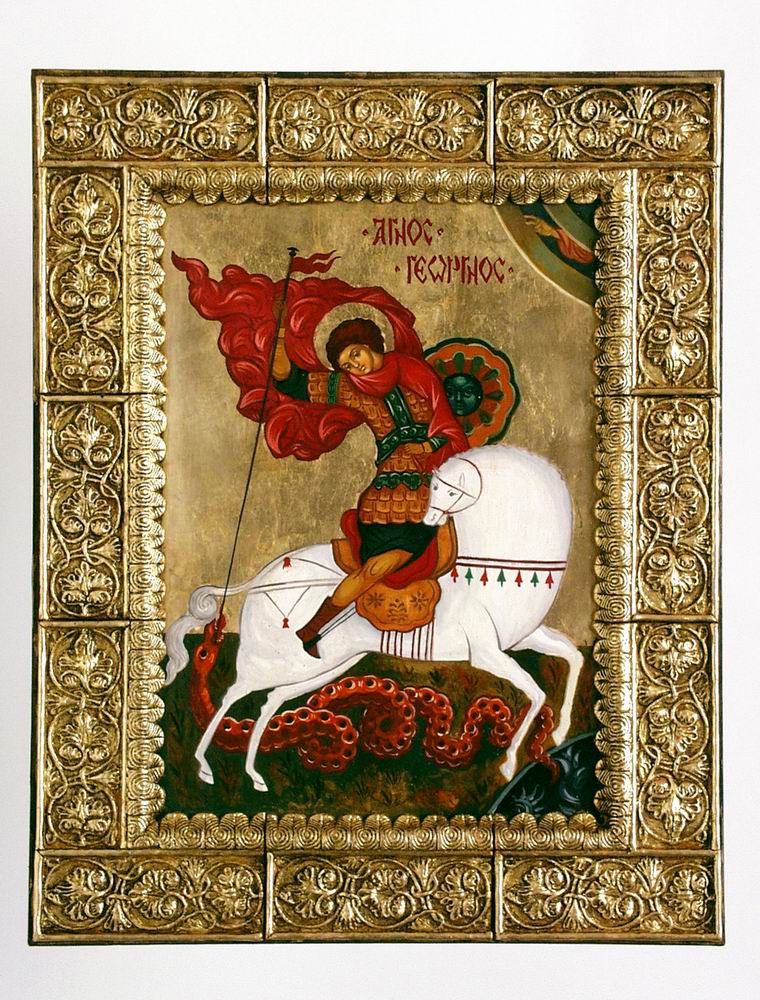
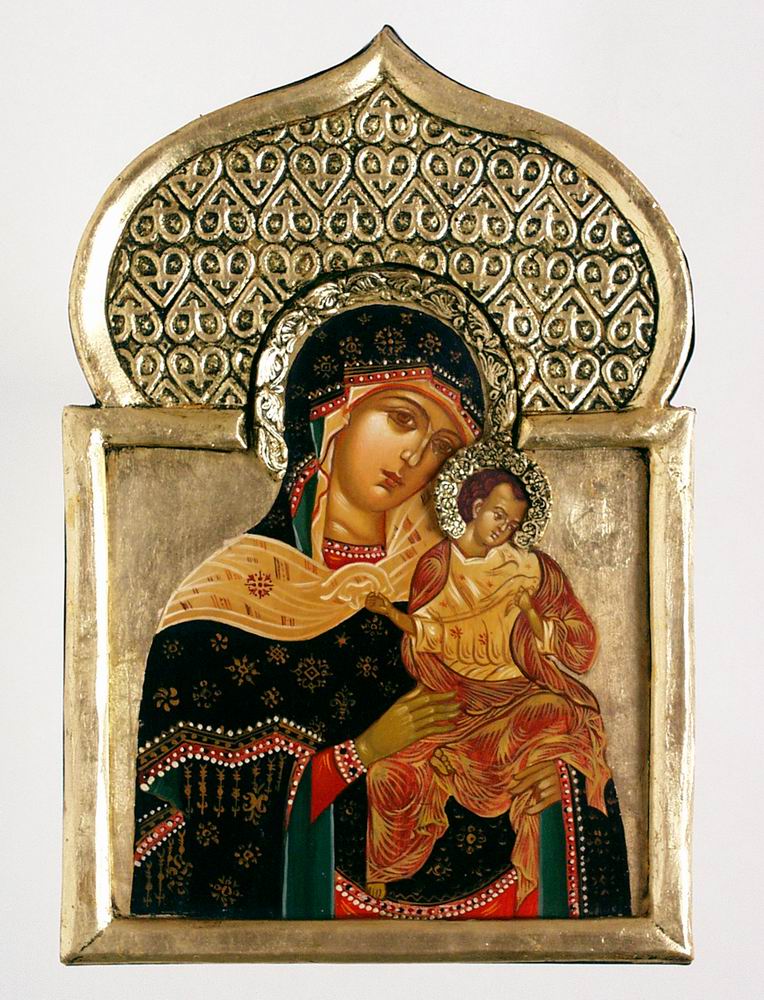
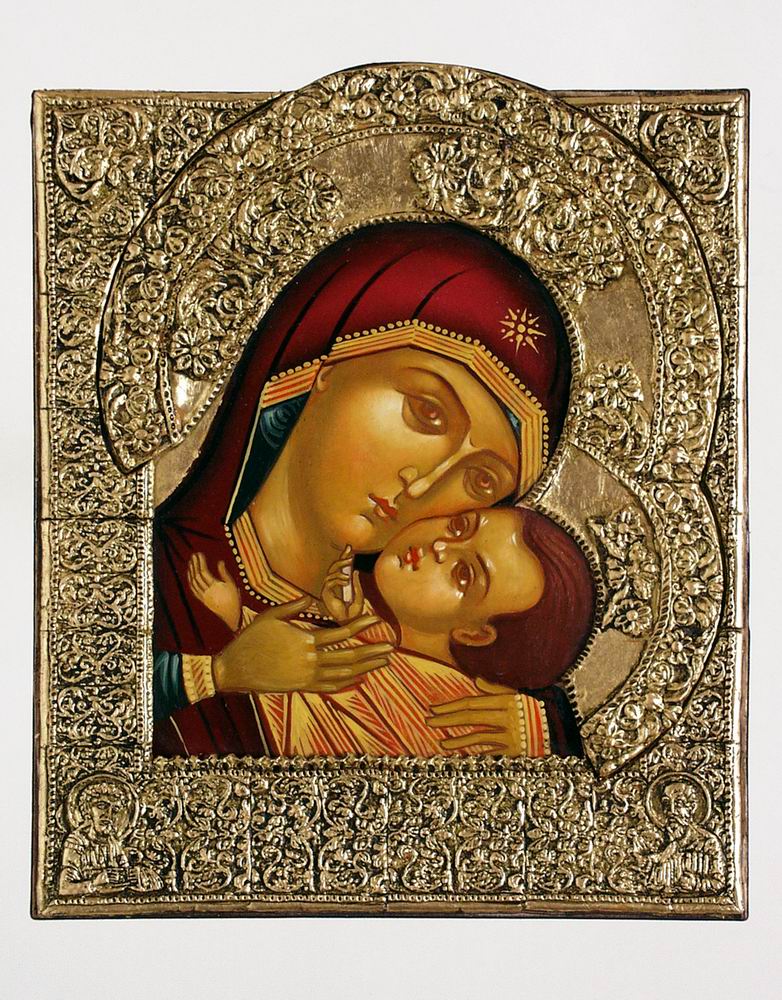
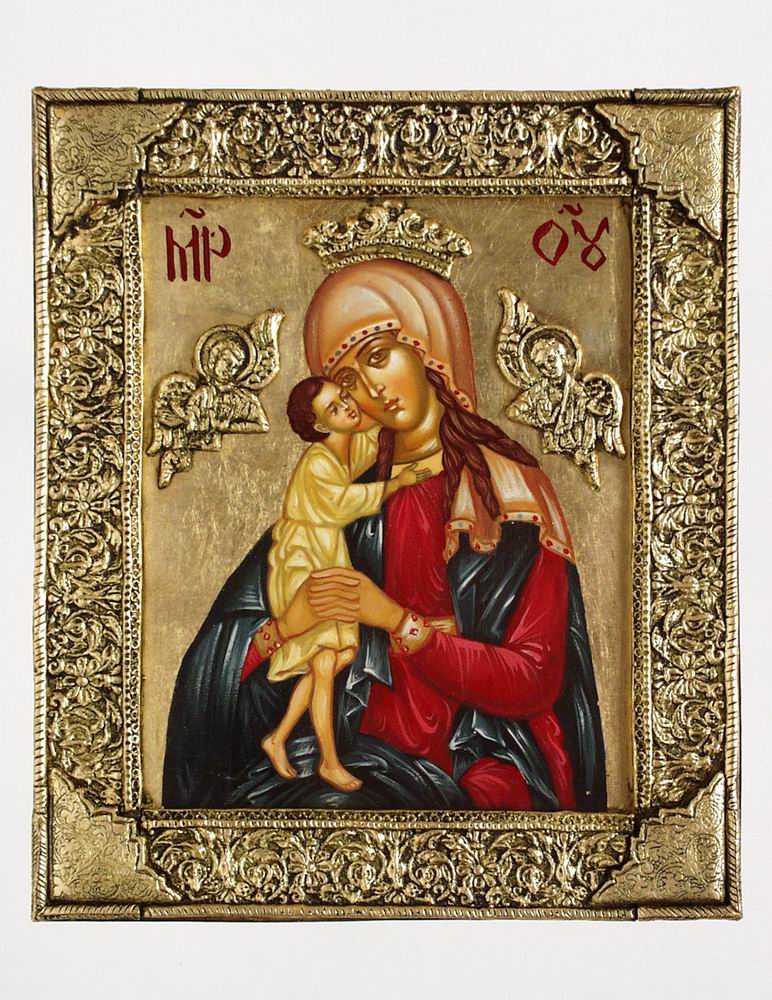
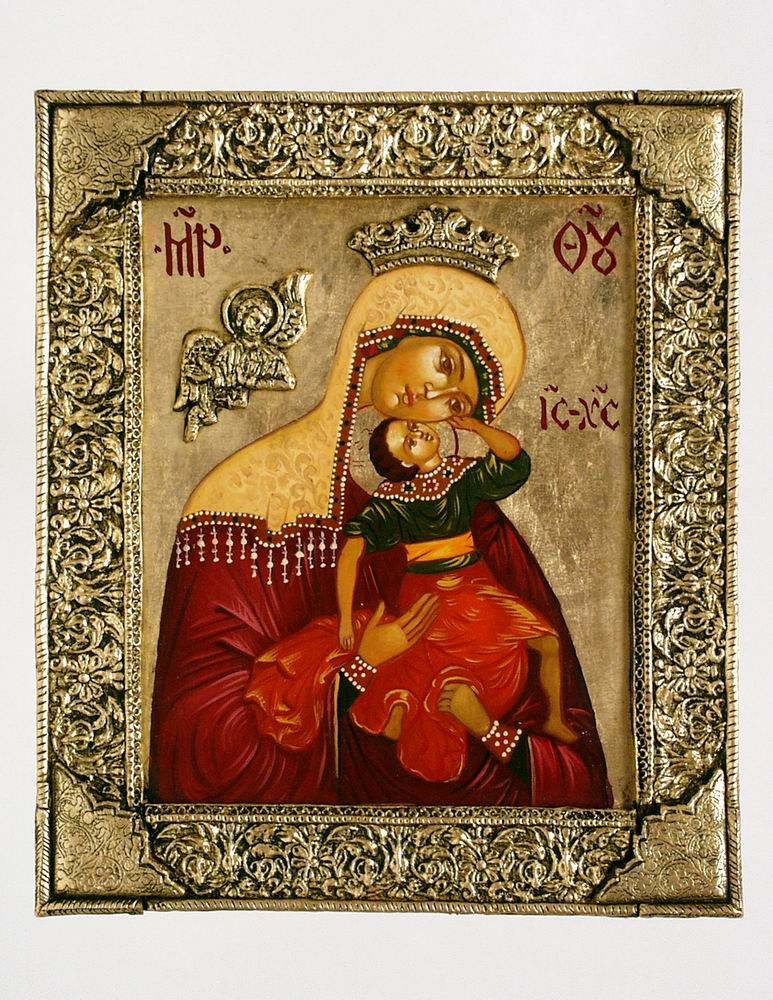
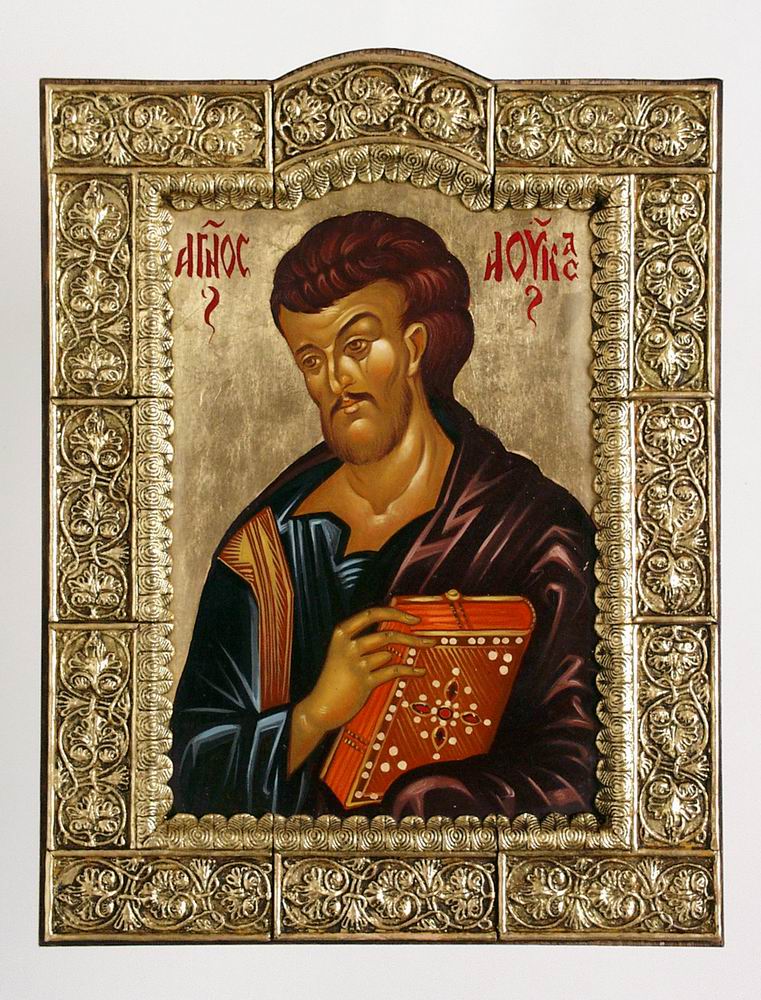
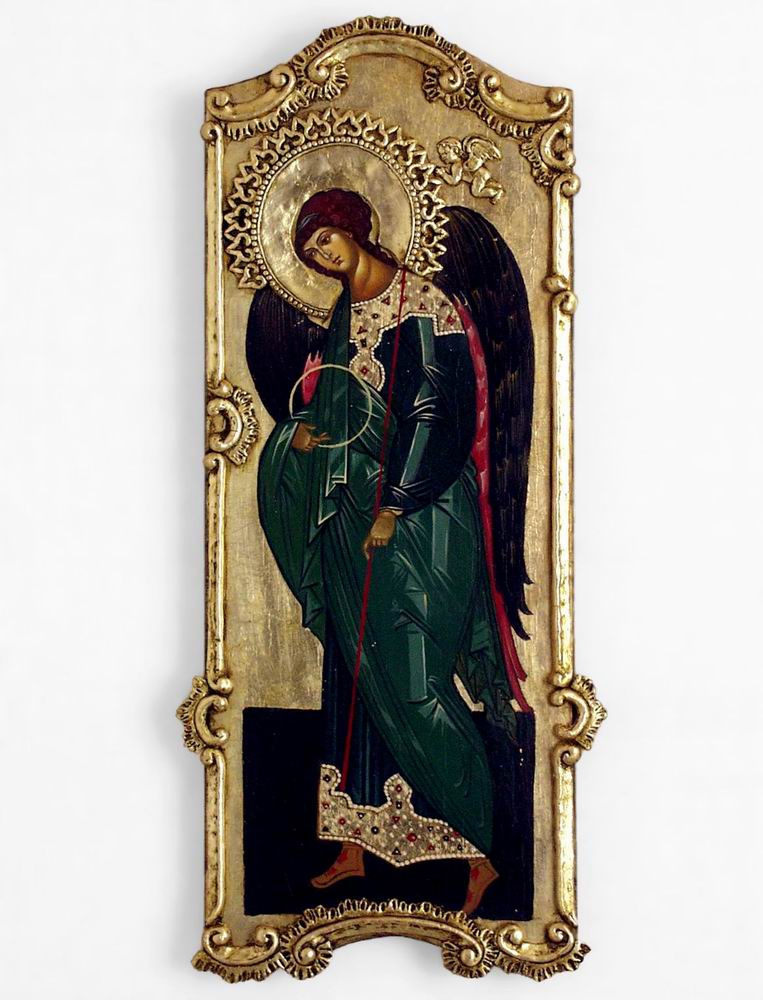
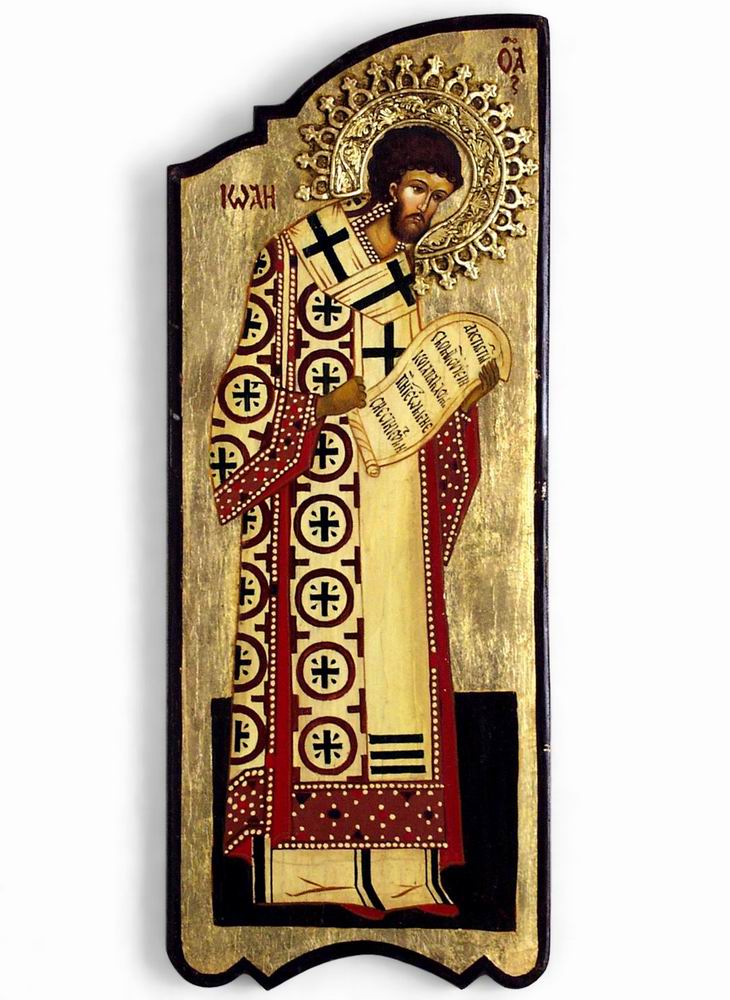
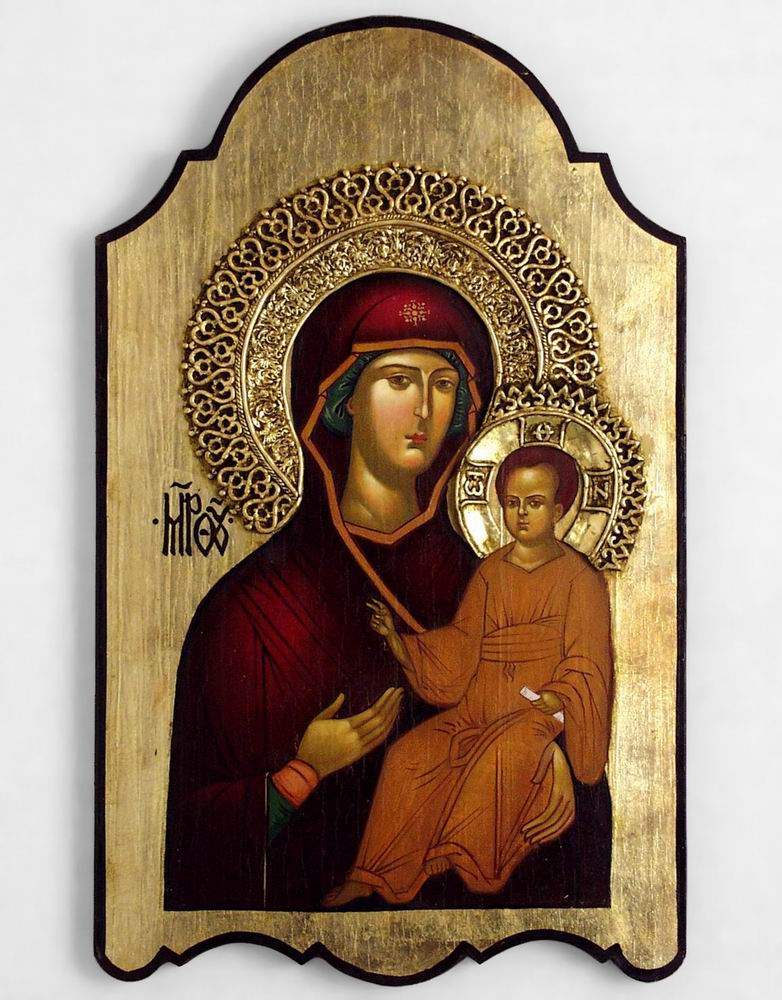
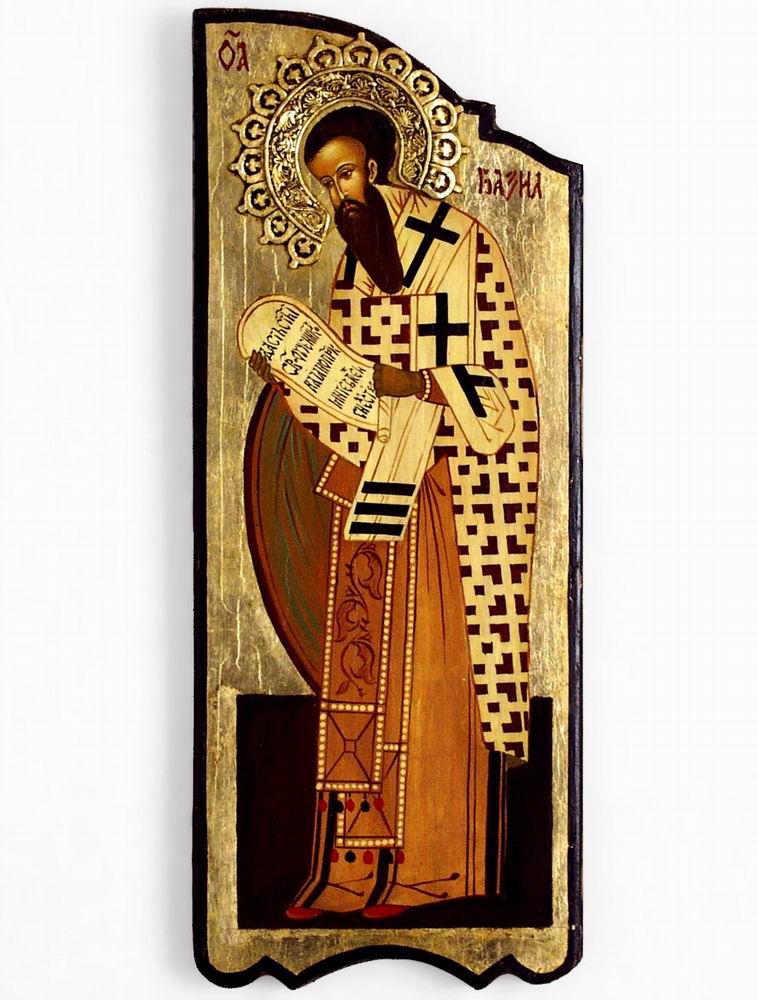
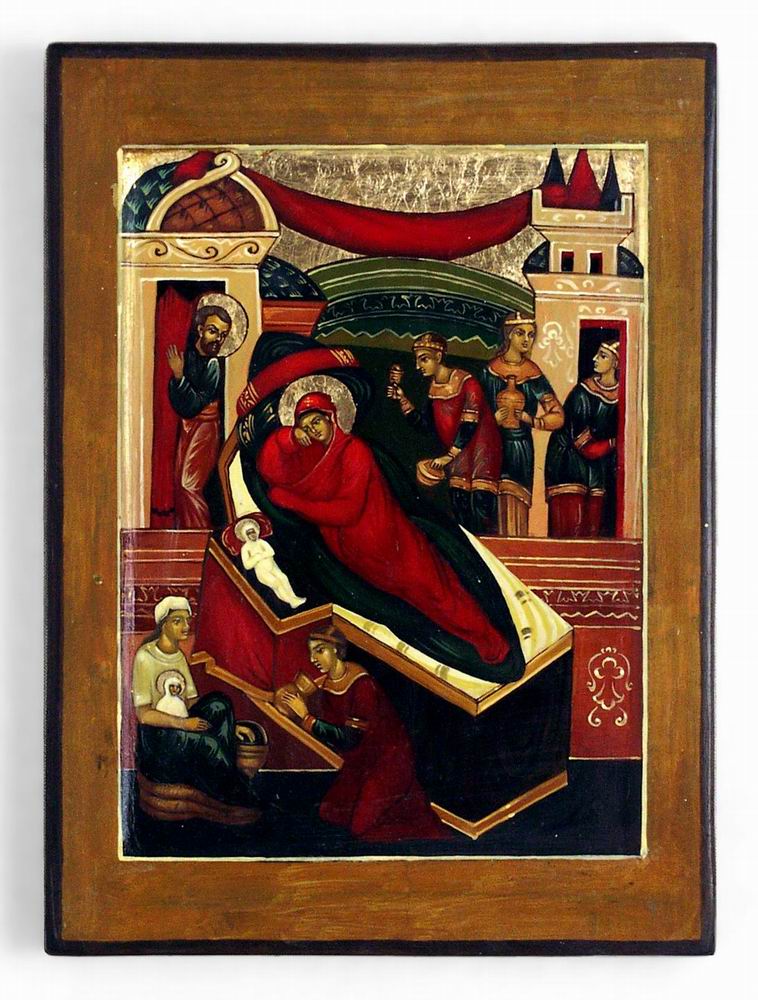
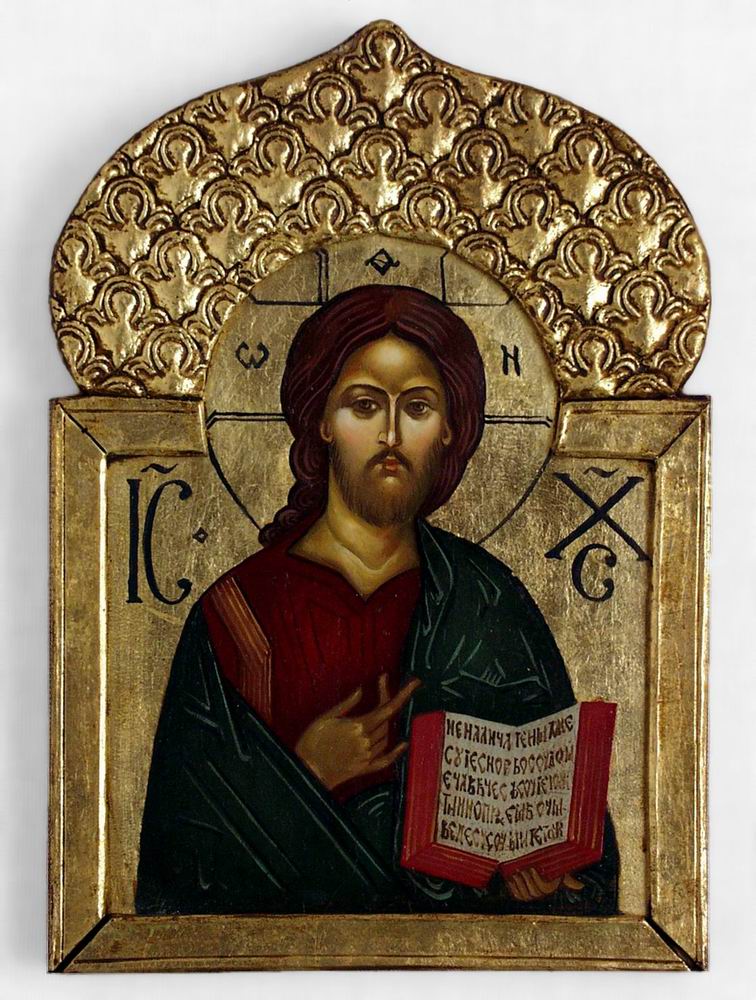
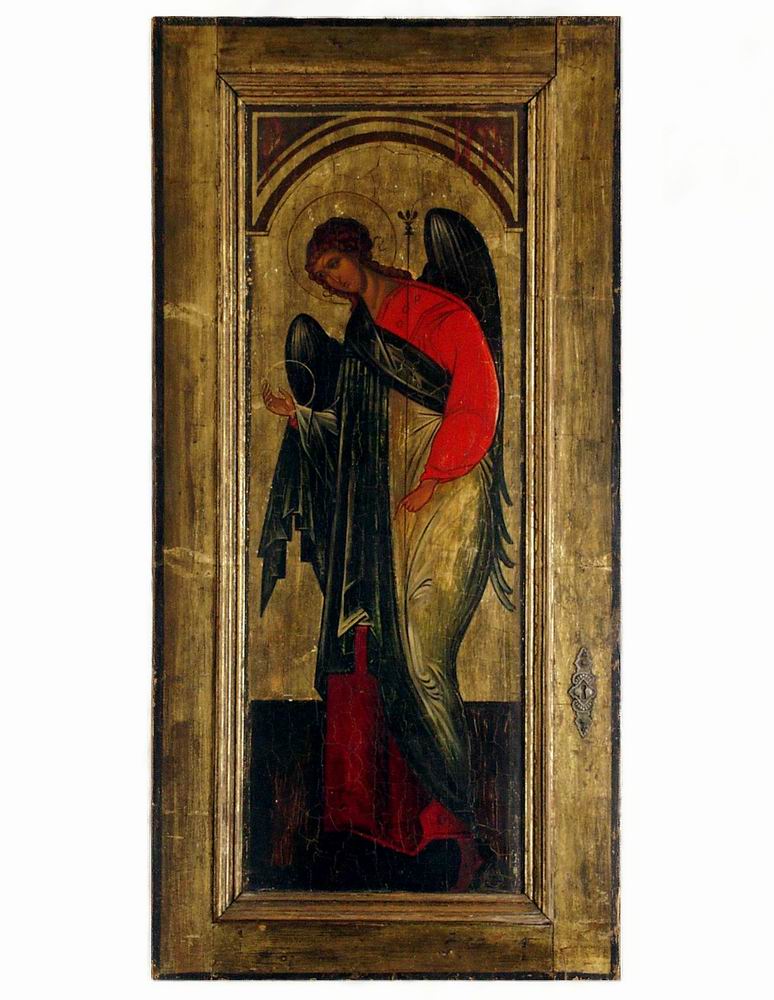
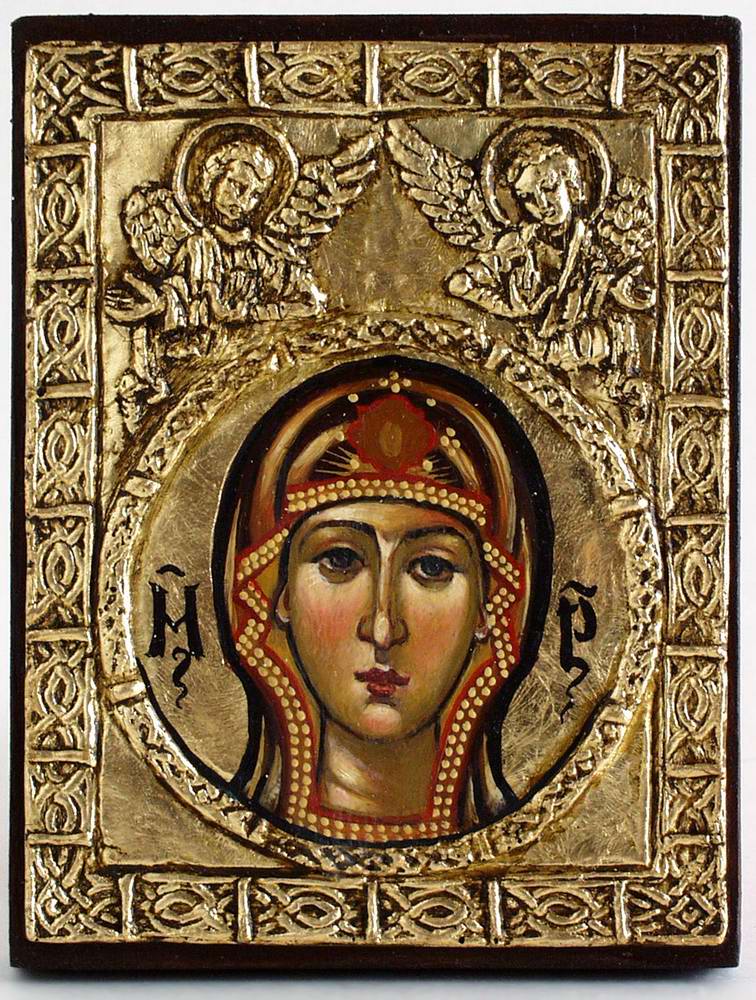
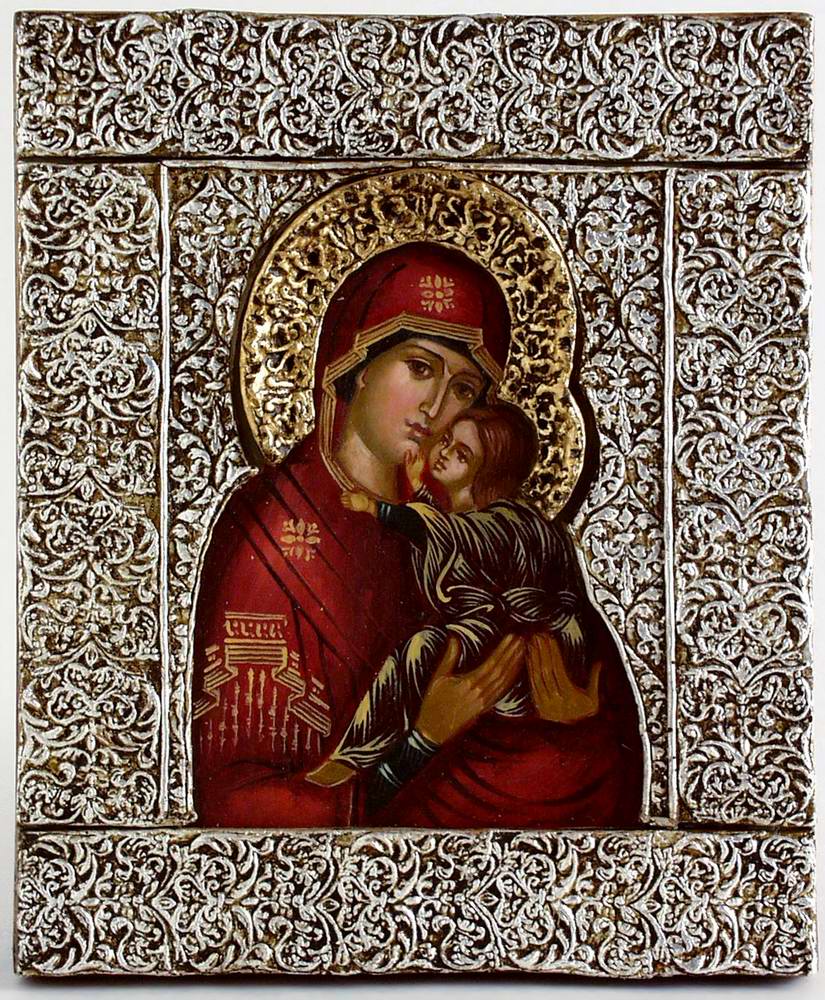
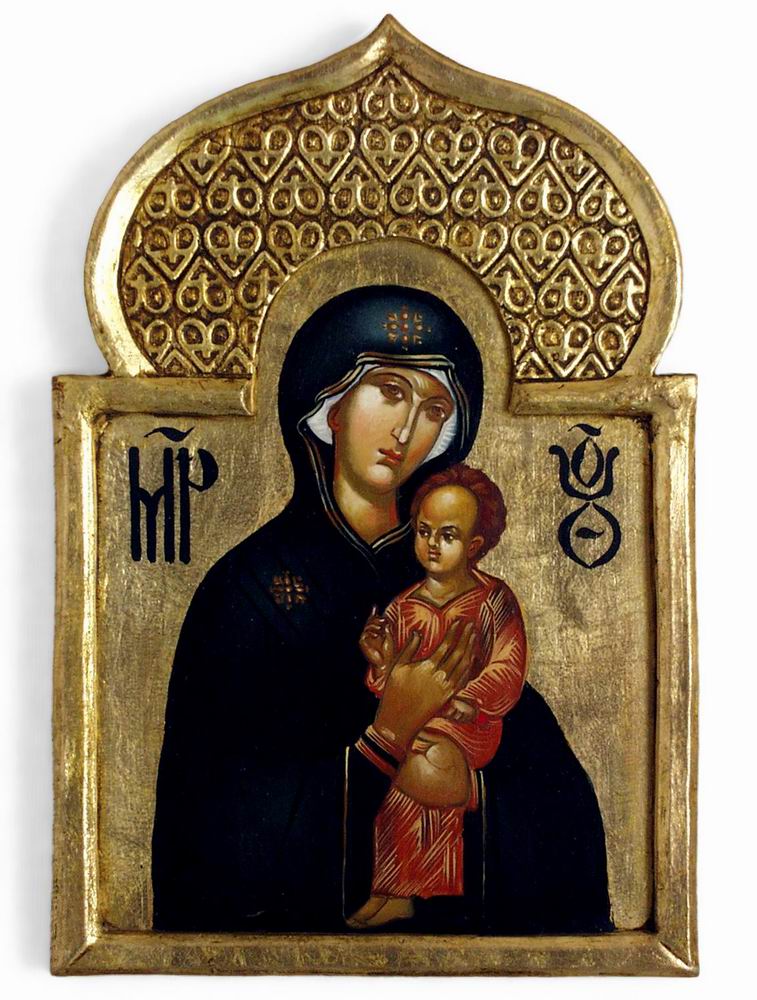
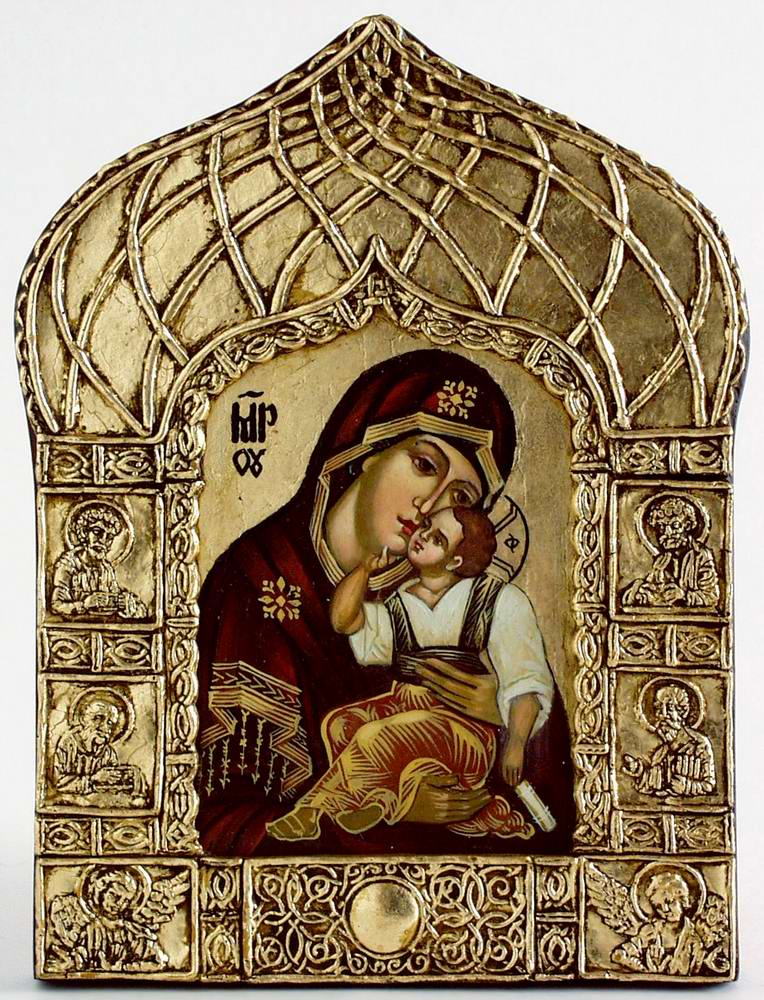
egyfajta stílusunk. Mintegy 50 féle ikont készítettünk
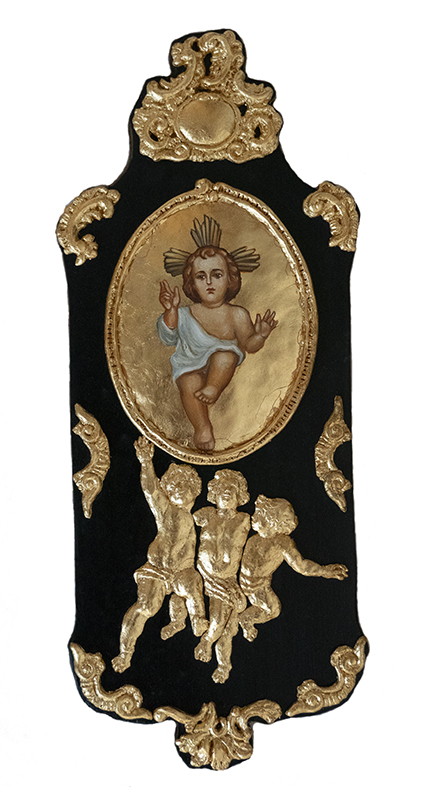
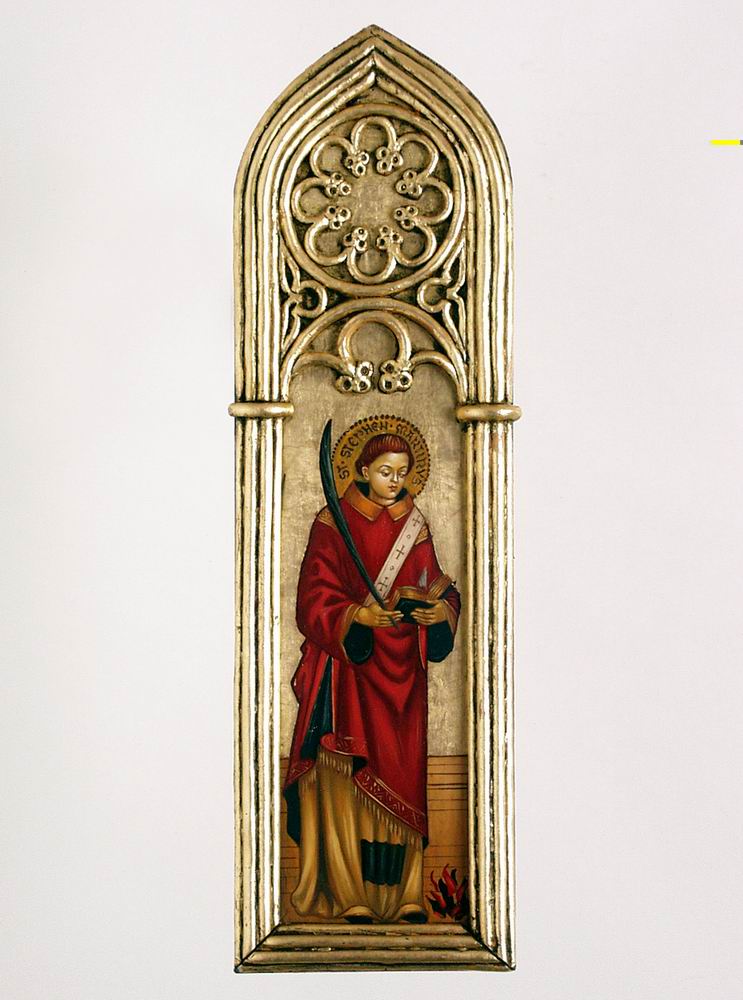
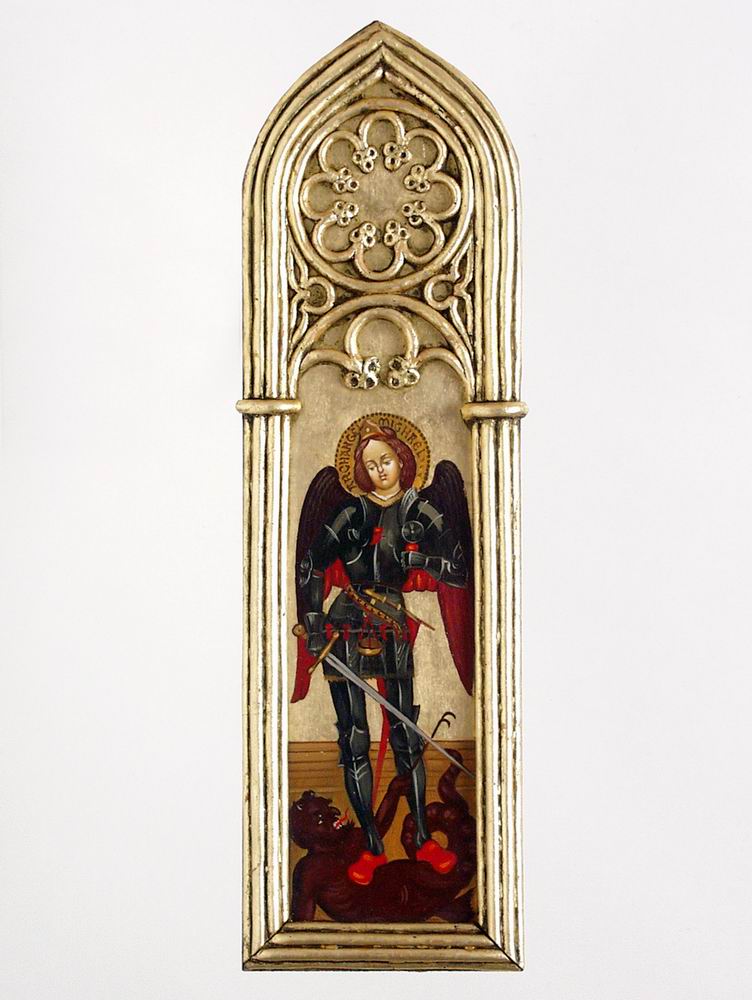
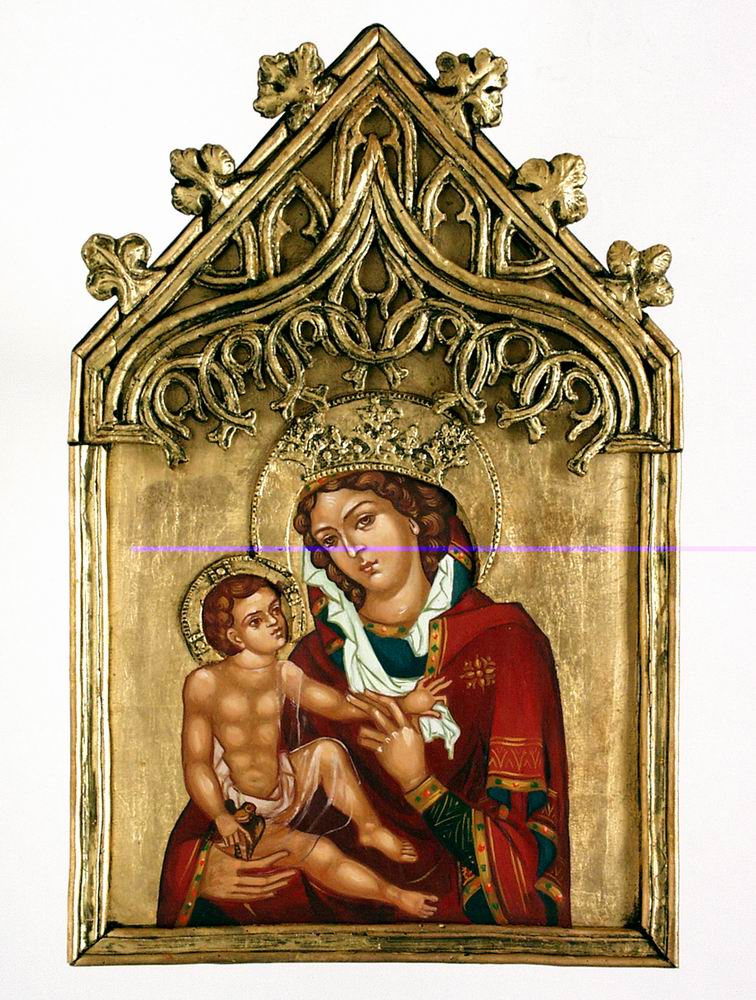
eddig. Érdeklődünk a gótikus táblaképek, oltárok iránt is,
amelyek szintén fára készültek ugyanilyen alapozással és
aranyozással, de a motívumok és a festés stílusa teljesen
más. A cseh és francia internacionális gótika és olasz
táblaképek alapján eddig 8-10 alkotás született.
Dolgozunk a folytatáson.
Pár szó az ikonkészítésről
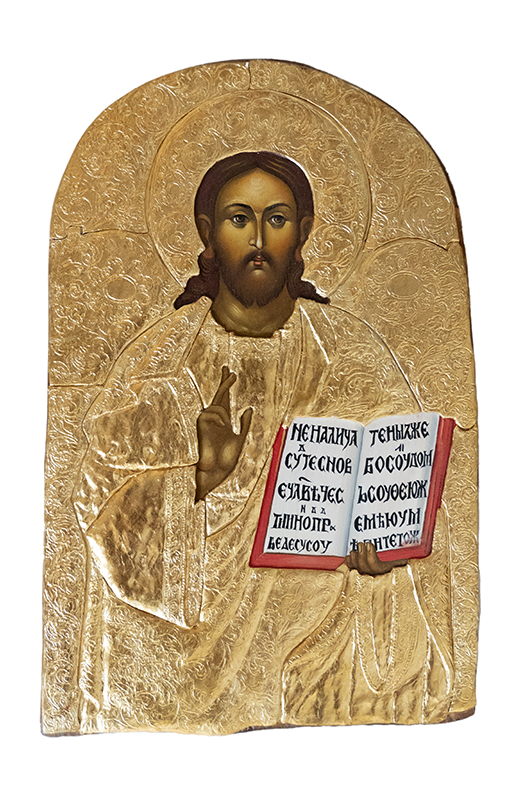
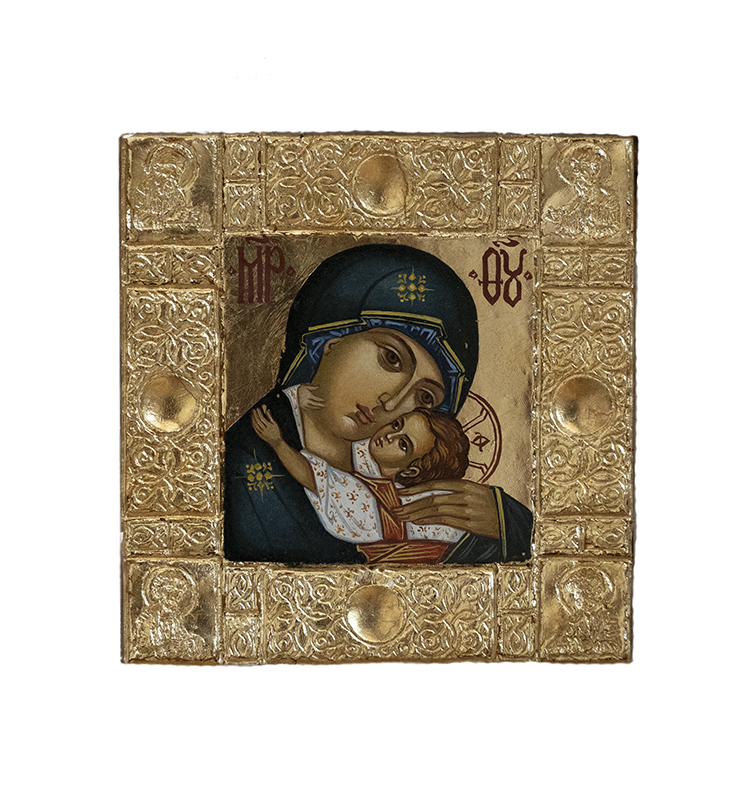
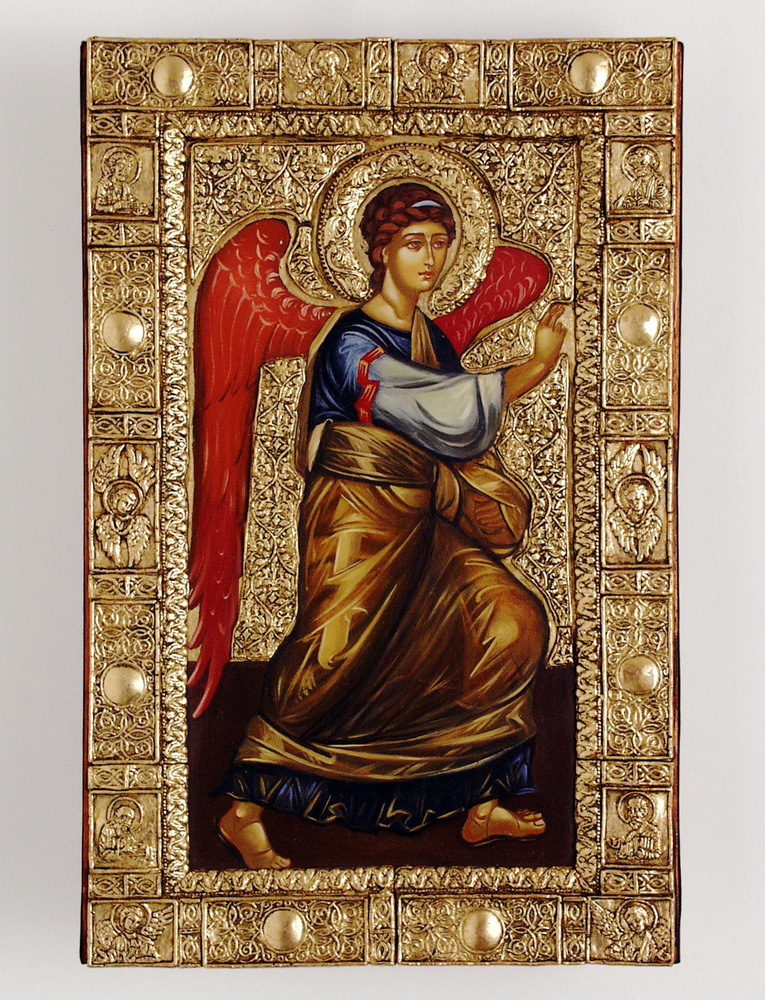
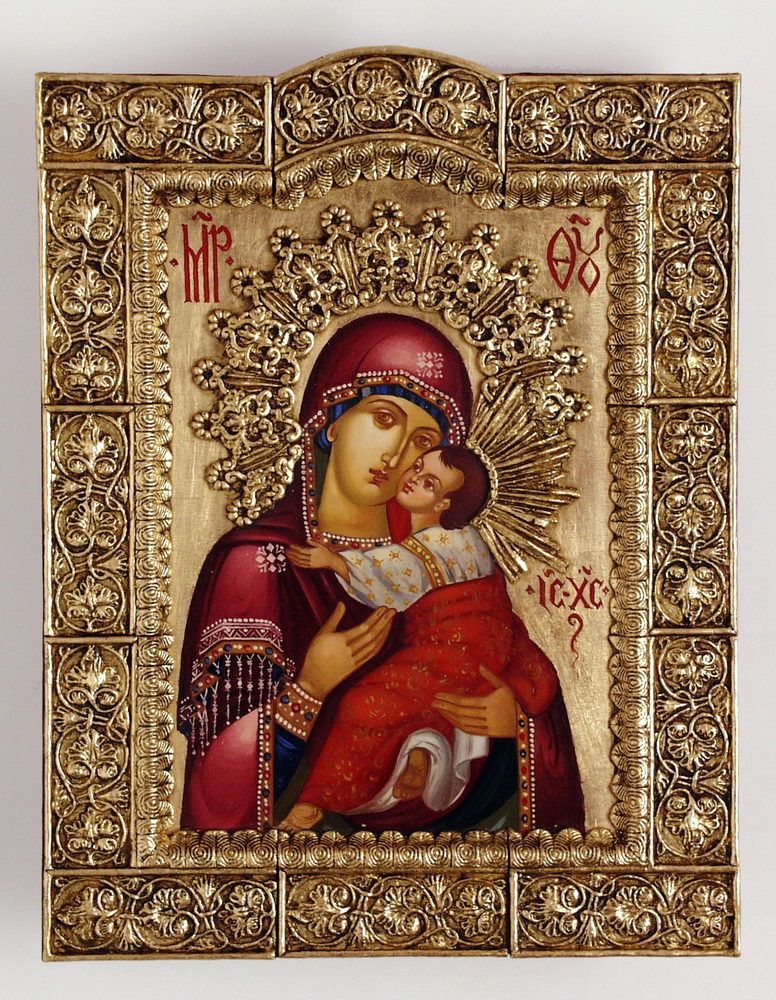
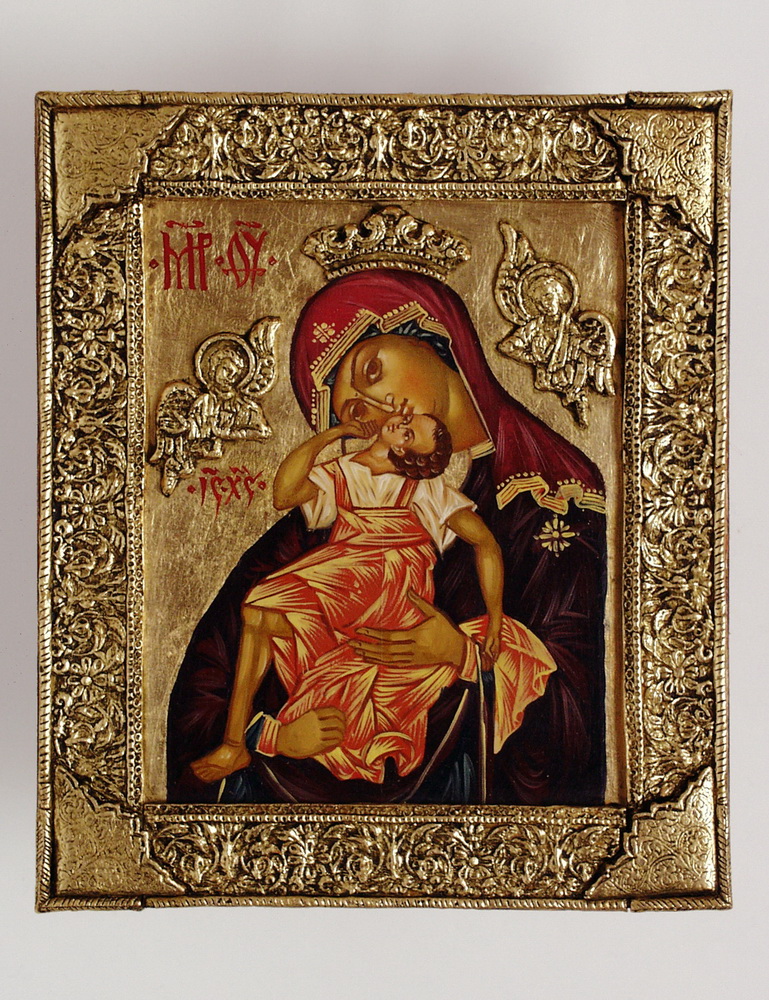
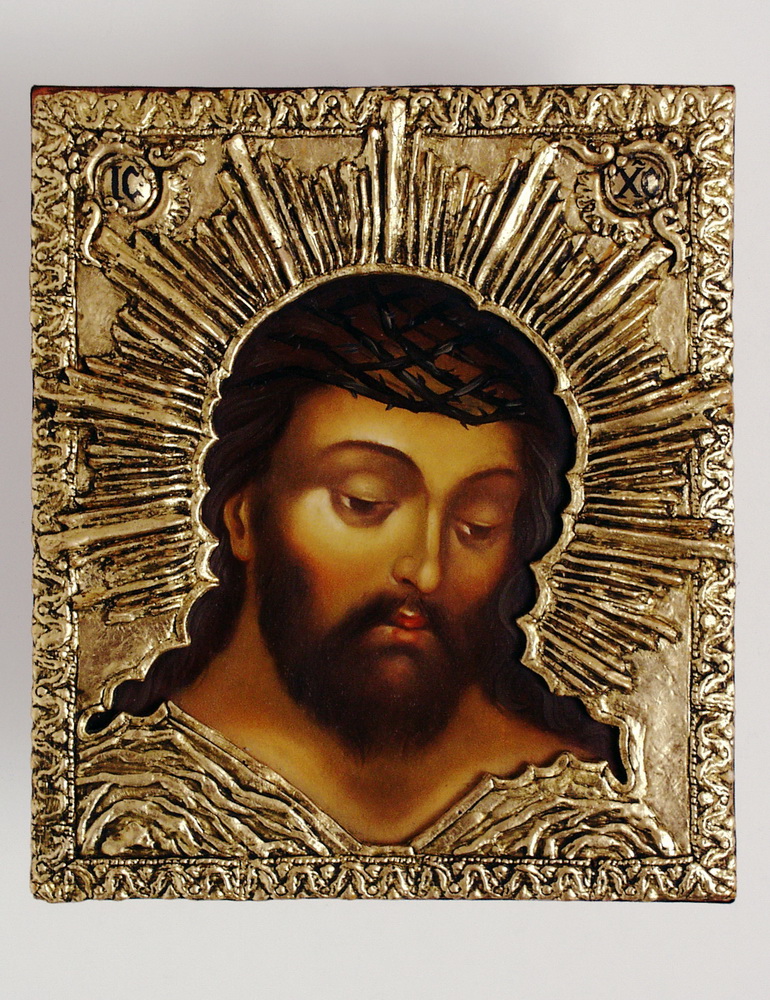
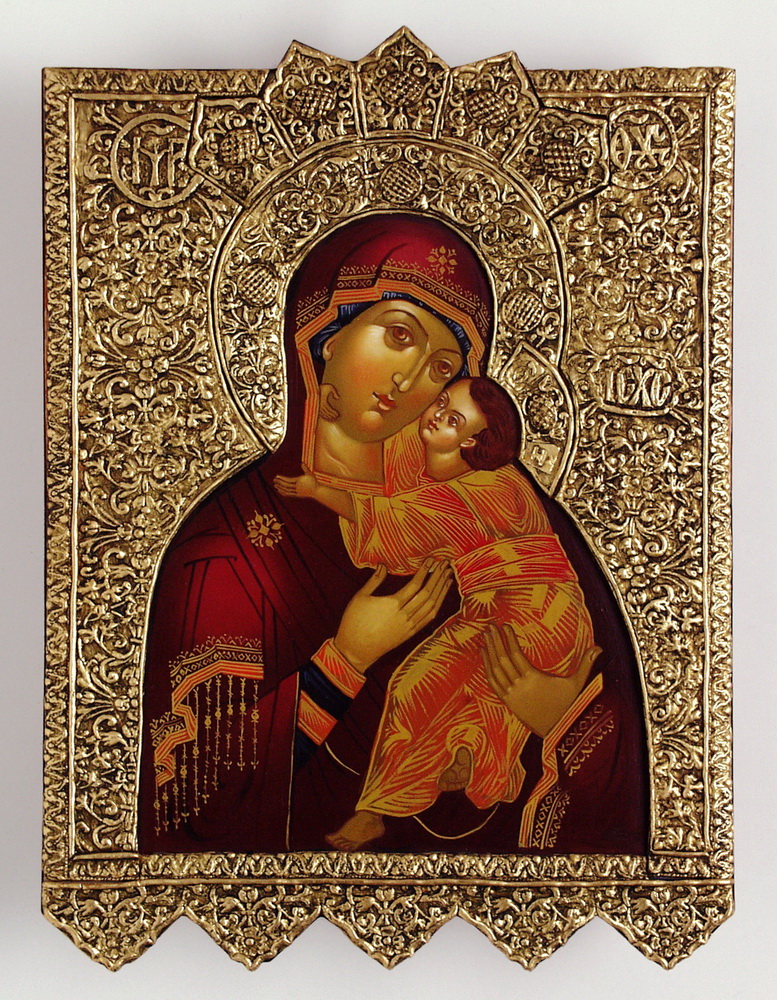
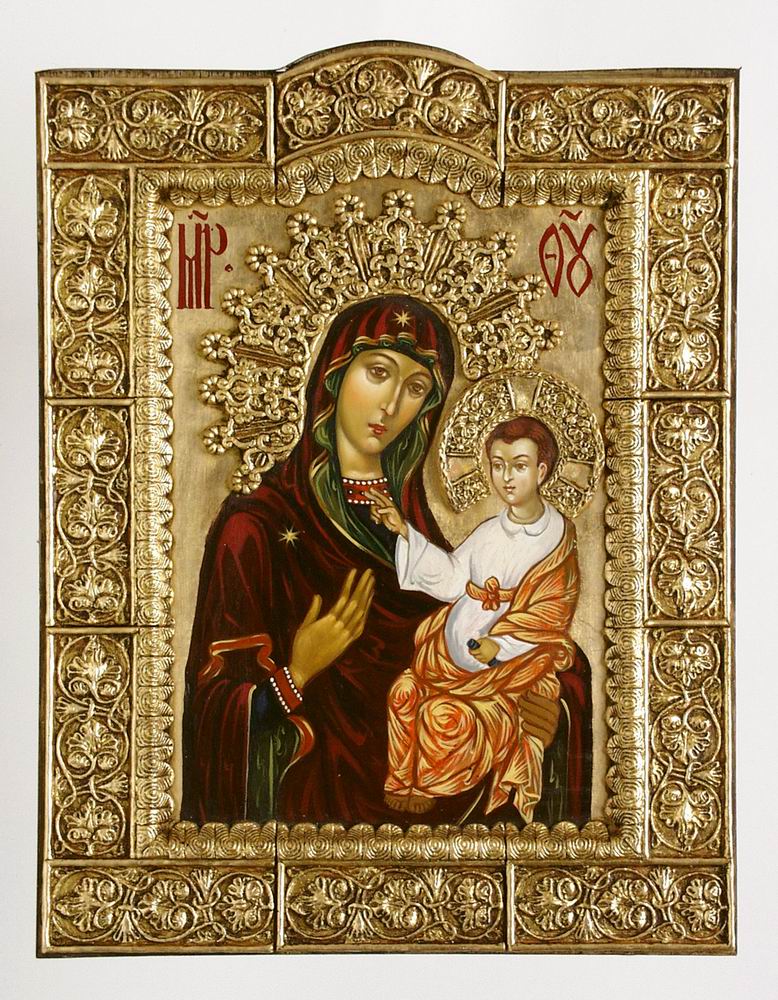
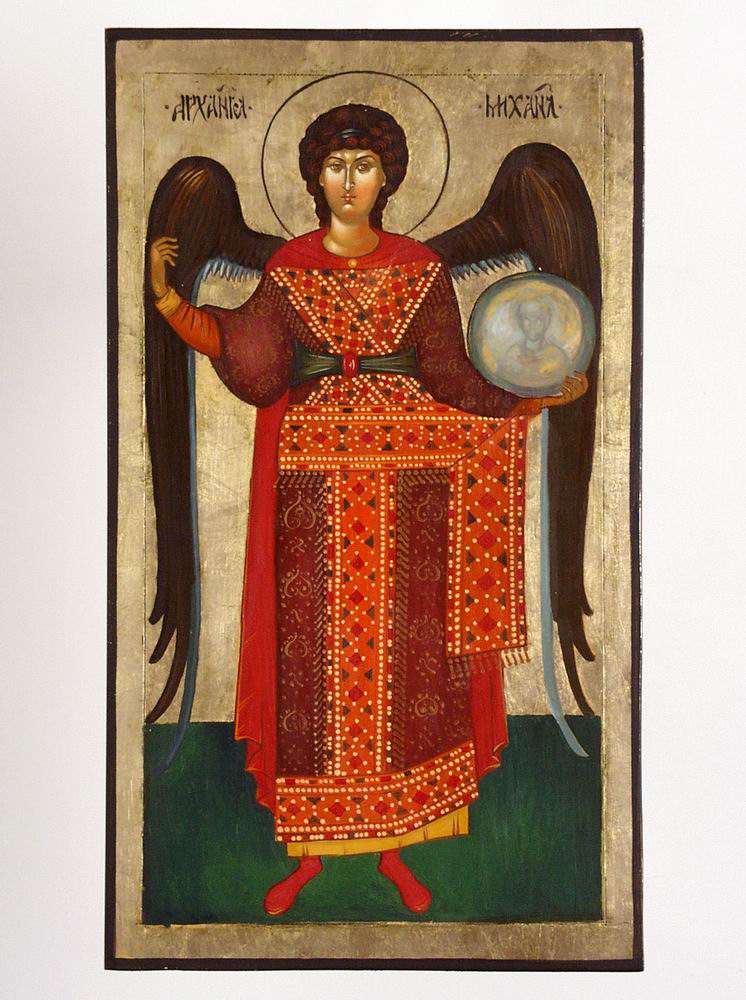
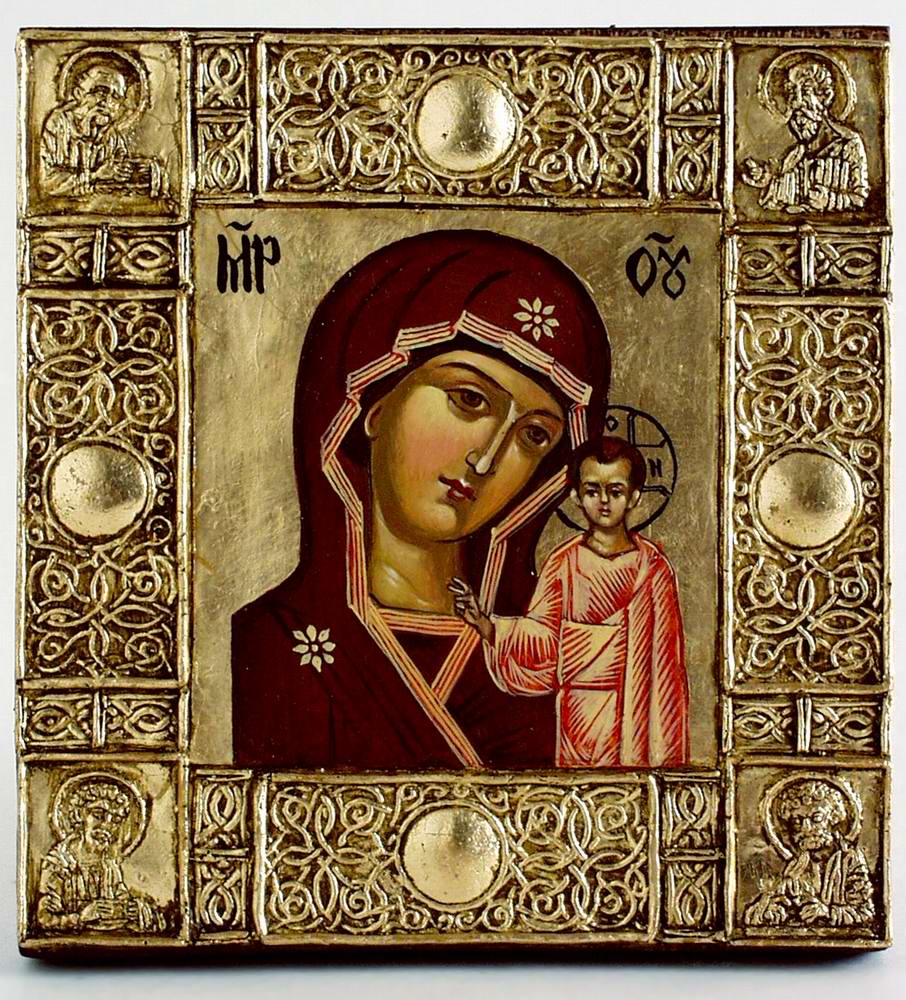
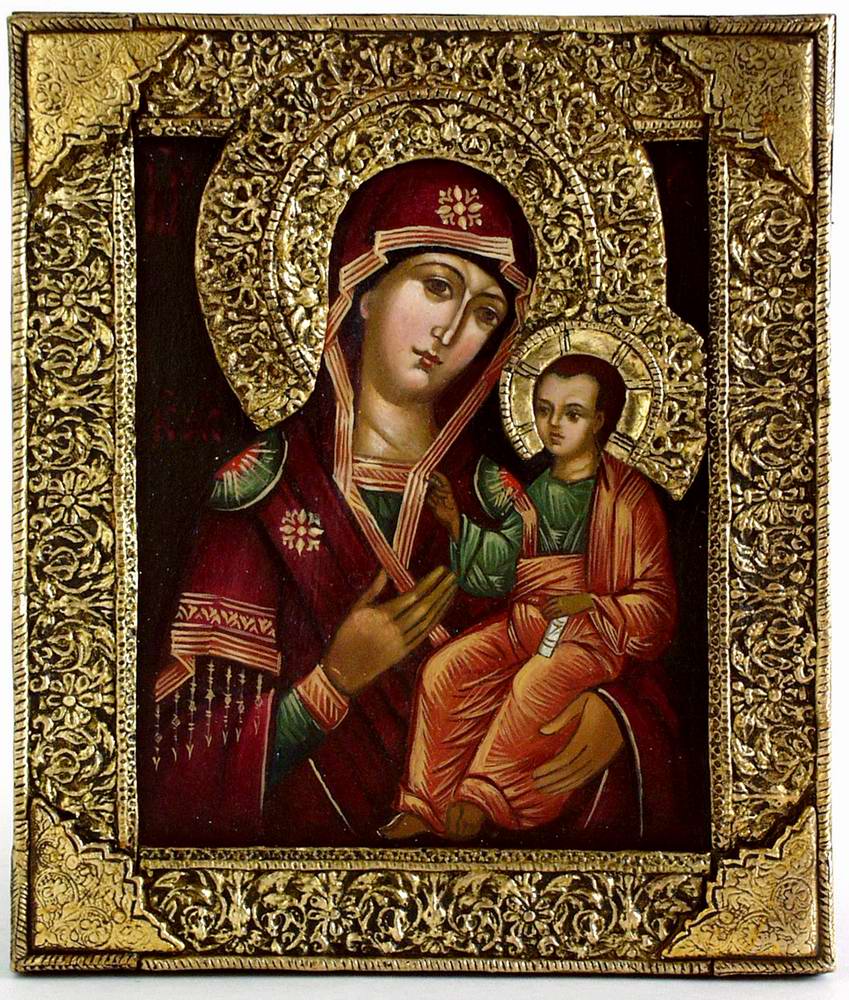
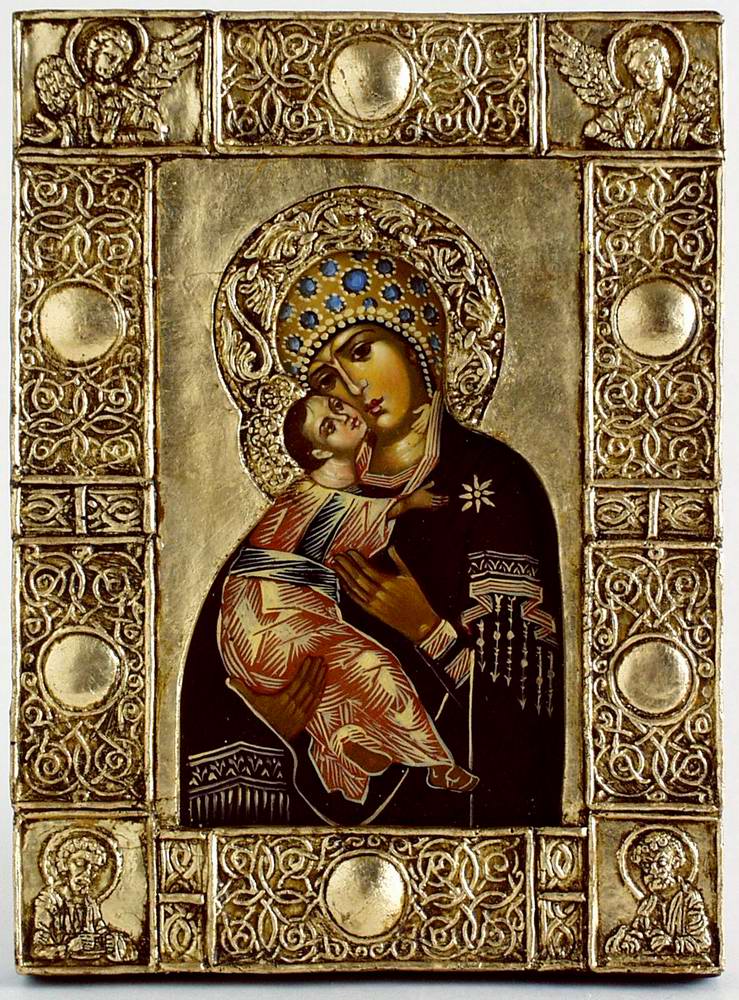
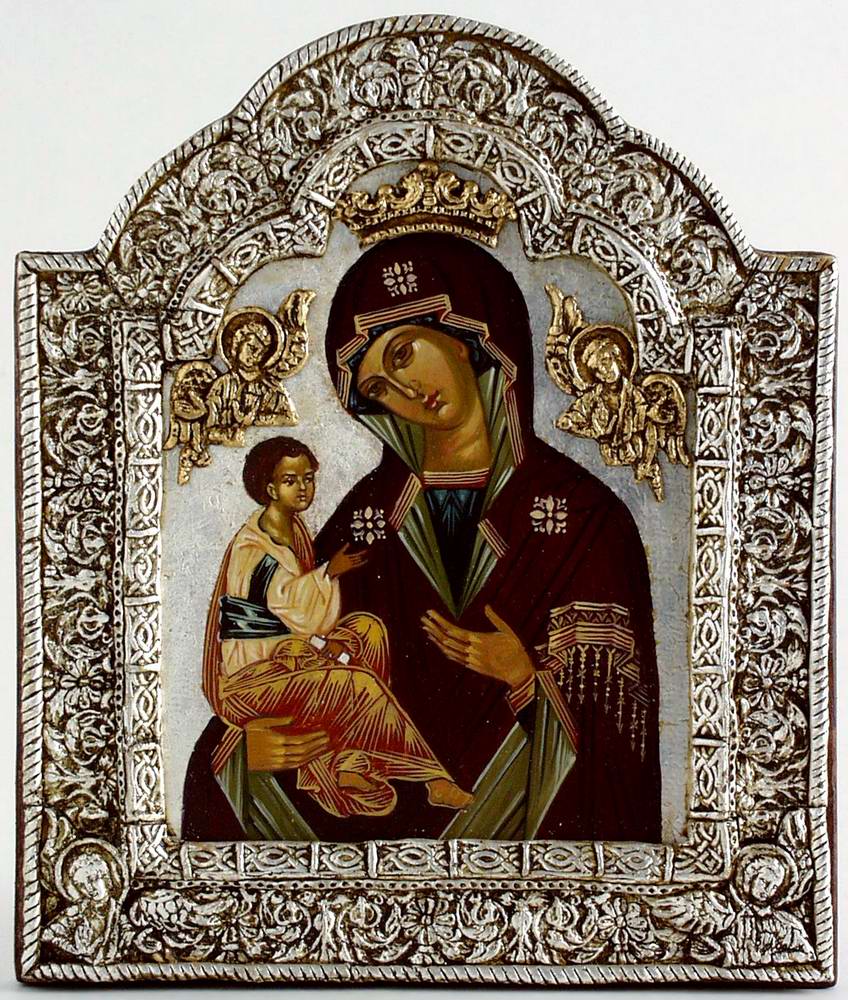
Az ikon tulajdonképpen fára festett kép. A legkorábbi a VI.
szd.-ból maradt fenn. Később elterjedt Görögországban, onnan
Oroszországba. A legszebb képek a görög és orosz ikonok
másolatai. A másolás az ikonok alkotásánál elengedhetetlen.
A vallási hagyomány szigorúan megszabta a különböző szentek
ábrázolásánál a figura helyzetét, kézmozdulatát, azt, amit a
kezében tart, az arckifejezését, a gondolatot, amit
sugároznia kell, a ruhája színét, mintáját – mert mindennek
megvolt a maga jelentése. Így aztán az egyes szentek külön
kéztől származó ábrázolásai meglehetősen hasonlítanak
egymásra. A készítés technikája évszázadokon át ugyanaz
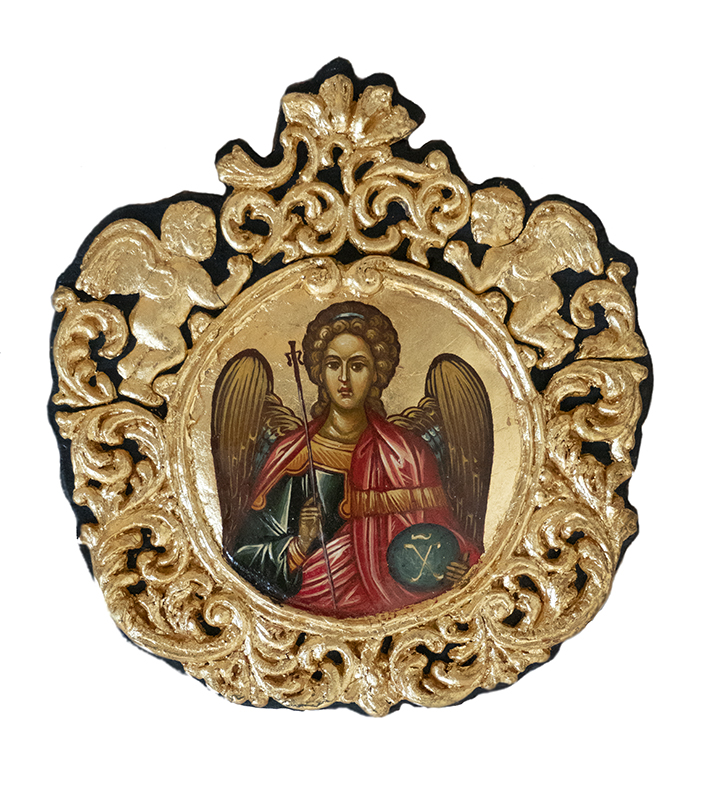
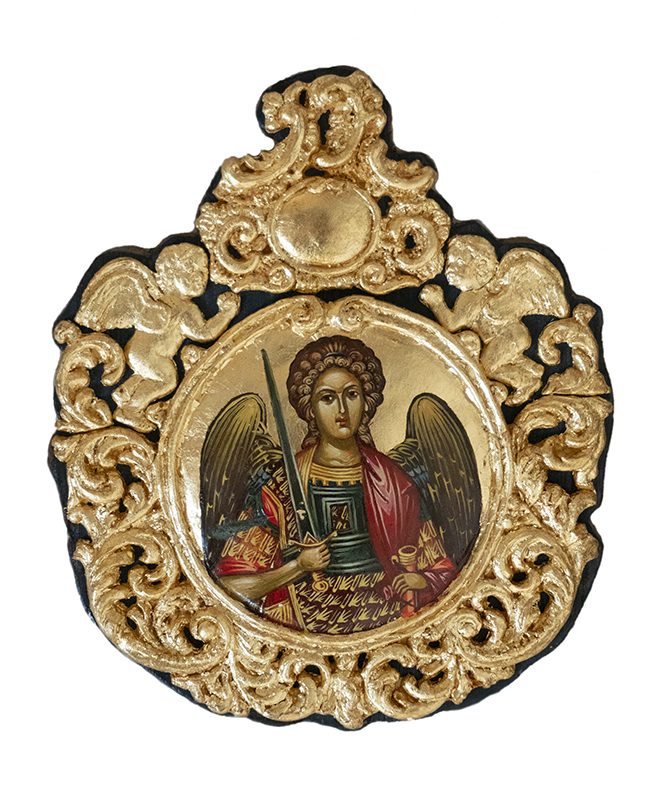
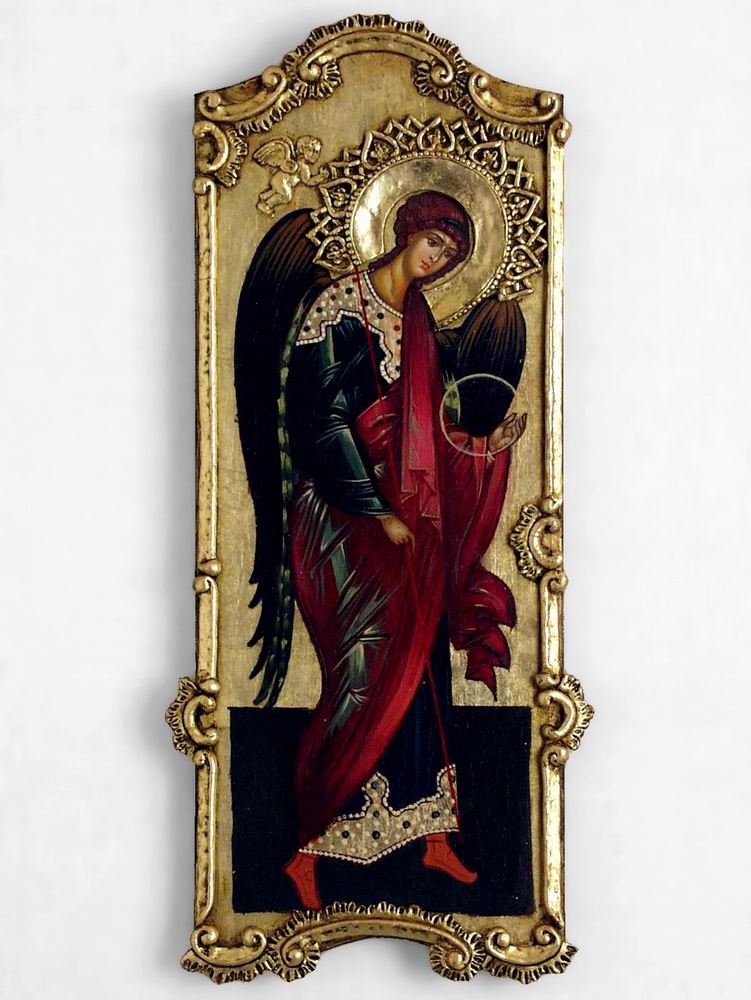
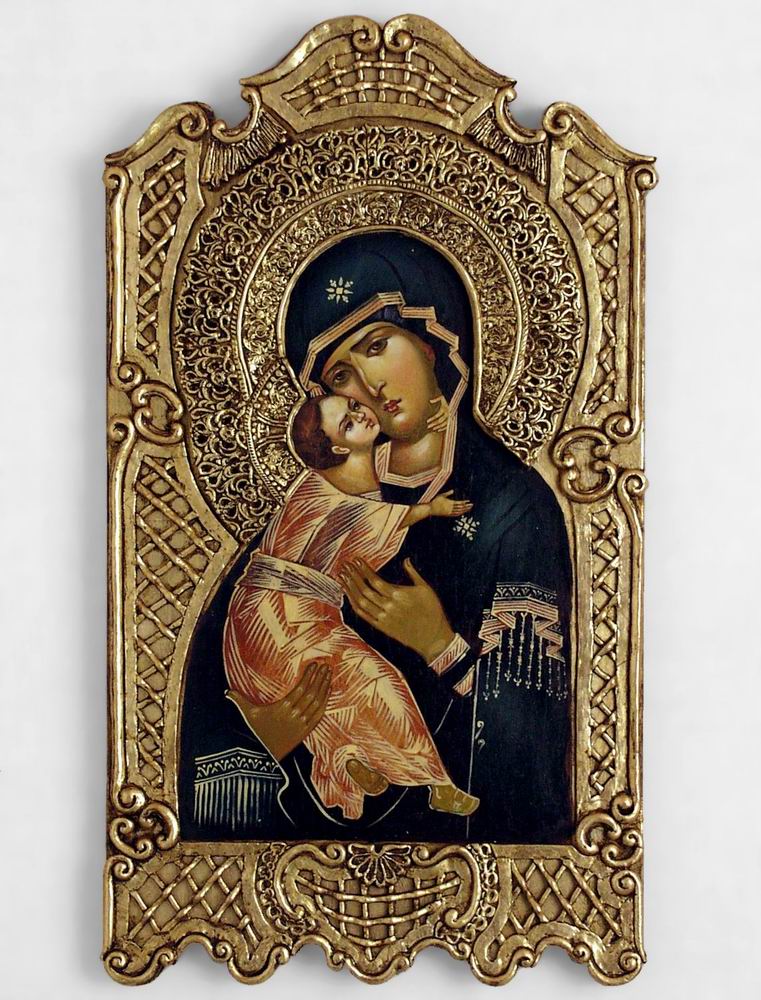
volt. A későbbi időkben a XV.-szd.-tól a képekre rátétek, -okládok-
kerültek. Néha az oklád értékesebb volt, mint maga a kép.
Mi az évszázados hagyományokra támaszkodva készítjük az
ikonokat –amennyire ez lehetséges. A munka az
anyaggyűjtéssel kezdődik. Ha megvan a lemásolandó kép, meg
kell tervezni, hogy fog kinézni, mekkora legyen, milyen
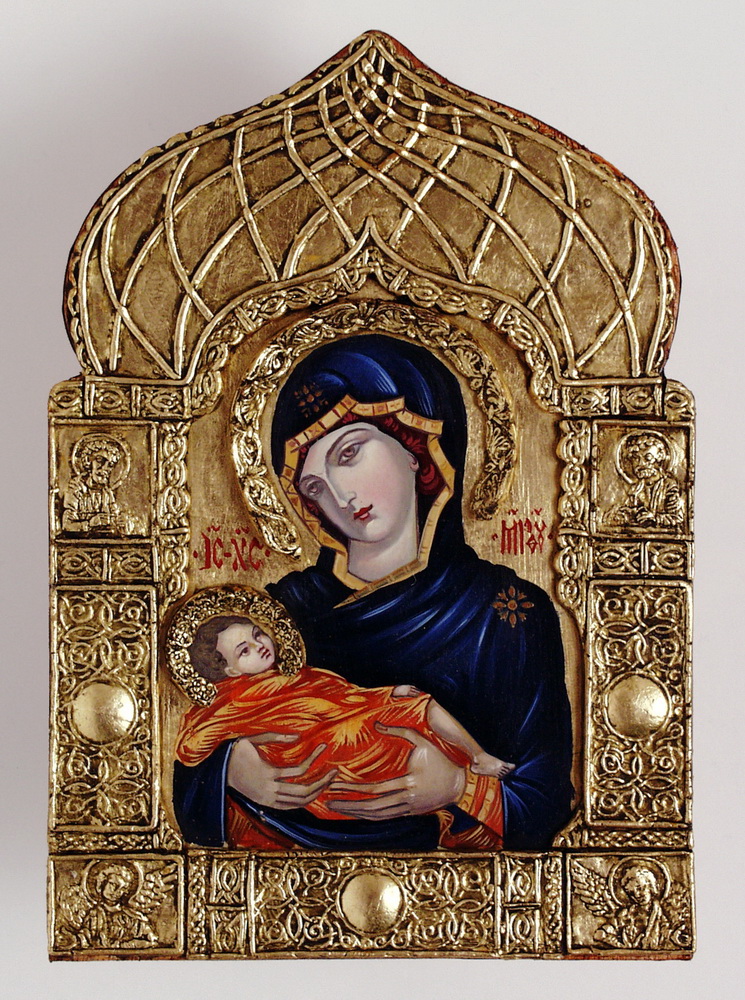
alakú alapra kerüljön (hagymakupolás, csúcsos, íves tetejű,
stb.), milyen rátét kerüljön rá, milyen színe hatása legyen.
Ezután a megfelelő faanyagból kivágjuk az ikon alakját
(körvonalát), majd lealapozzuk a hagyományos enyves
gipsszel, amit géz alapra viszünk fel, hogy jobban tapadjon.
Következik a figura fölrajzolása, majd aranyozzuk a képet
vékony aranylapokkal úgy, hogy az alakot sablonnal
letakarjuk. Most kezdődhet a festés, ami hosszú ideig tart,
mert ez a legigényesebb része az ikonkészítésnek. Közben
folyik a rátétek mintázása, amit eredeti motívumok alapján
tervezünk meg. Plasztilinból lesznek az apró mintarészek,
ezekről formát csinálunk – egy képhez sokszor 5-8 félét is –
gipszből. A formákba újra plasztilint préselünk, és kirakjuk
belőle a rátétet úgy, ahogy végül ki fog nézni. Erről több
darabos szilikon gumi formát készítünk. A gumiformákba
gipszet, vagy legújabban egy kemény és nagyon finom
felületet adó műgyantát öntünk. Ha megszilárdulnak, ezeket
ragasztjuk rá az ikonra, majd aranyozzuk. Az utolsó fázisban
leviaszoljuk a képeket és öregítjük. Címkét ragasztunk a
hátára, amin feltüntetjük, hogy az eredetit hol őrzik
jelenleg, ki és mikor alkotta. Végül viaszpecsétet rakunk
rá.
Herendi Zsolt ,
Szatmári Magdolna
Példaképeink,
mesterink:
Sallai Héza, Dimitrosz Sziregholasz
Önálló kiállítások:
2005. november XVII. kerületi Dózsa Művelődési Ház, Budapest
2013. március Dunapalota, Budapest
2019.
április, Budapest, Wekerlei Társaskör
Csoportos kiállítások:
2005. április Artexpo, Debrecen
2005. október Tokaj
2016. október, Budapest, Dunapalota- 56-os
kiállítás. |
Elérhetőség:
Budapest 1192, Bercsényi utca 31.
Telefon: +36-70-547-7072
, E-mail:
magdolnaszatmari@gmail.com
Website: www.festomuvesz.hu/szatmari
, www.painter.hu/szatmari |
|
|
A FEW WORDS ABOUT OURSELVES 
|
We both
come from families with artistic traditions (painting, ceramics,
sculpting) It was by chance that we turned to icons. Some 14 years
ago, in a shop selling icons Zsolt spent such a long time on
enjoying the pictures that he attracted the attention of the
shopkeeper, who suggested he should try his hand, and then the
shopkeeper would attempt the paintings made by Zsolt. The
beginning was very hard indeed. The foundation proved to require
plenty of practice before becoming really good. It did happen,
that the foundation cracked and peeled off together with the
picture two or three month after completion. Gilding also required
a long learning exercise. Luckily, the shopkeeper showed a lot of
understanding and patience. We work with the following division of
labor. Zsolt is designing and painting the pictures. I prepare the
design of the icon as a whole, and then discuss it together. I
prepare the foundation, shape and prepare the applications,
prepare the moulds, make the gilding. By now we have developed own
our style. So fare we produced 50 types of icons. Lately we
became interested in Gothic paintings, altars, which are also
based on wood table. The foundation and gilding technologies are
similar, while the motifs and the style of painting are different.
So far, we prepared 8-10 types of pictures. We are now developing
our future style.
A BRIEF
DESCRIPTION ON HOW ICONS ARE MADE
Icons are in fact pictures painted on
wood. The earliest icons available were made in the 6th century.
Later it became widespread in Greece, and from there in Russia.
The most beautiful pictures are the reproductions of Greek and
Russian icons. Copying is an essential component of icon making,
as religious tradition strictly specified the position of the
various saints on the picture, the movement of the saint’s hand,
the articles he/she should have in the hand, the visual expression,
the idea the face should reflect, the color, design of clothing-
because all that had its special significance. Thus the saints
portrayed by different artists rather resemble one another. The
technology of icon making remained the same through centuries. In
later times different items (oklades) were applied to decorate the
icons. In certain cases such decorations were more valuable than
the picture itself. We are making the icons in accordance with the
traditions of centuries- to the extent possible. Work starts with
the collections of materials. Once we have the picture to be
reproduced we picture has to be designed, so we know how it should
look like , what the size should be, its shape (bulbous dome form,
spike shaped, arched, etc.), what decoration to apply, what the
color, the effect should be. Then we search for the timber, cut it
to shape, cover it with foundation made of the traditional glue
containing gypsum on gauze to make the foundation stick better.
Then the figures are drafted, then covered during the gilt
procedure. And now painting, the most demanding part of icon
making can start. In the main time the applications are designed
based on careful preliminary studies, using original motifs. The
tiny parts of the designs will be prepared of plastering, and
these shapes will be used for gypsum mould making; 5-8 types of
moulds are often required. Then again plastering is pressed into
the moulds and the design to be applied is composed to see how the
final design will look like. Silicone-rubber mould composed of
several parts is now being made. Gypsum or- more recently-
synthetic resin- producing hard and very fine surface- is poured
into the mould. After they become solid, they are glued on the
icon, and finally gilded.
In the last phase the pictures are covered with wax and became
subject to an ageing procedure. A label is attached to the back
specifying where the original is being found, and by whom and when
the original had been prepared. Finally we put a wax seal on the
icon.
Herendi Zsolt , Szatmári
Magdolna |
Availability:
Hungary, Budapest 1192, Bercsényi utca 31.
Phone: +36-70-547-7072
, E-mail:
magdolnaszatmari@gmail.com
Website: www.festomuvesz.hu/szatmarimagdolna
, www.painter.hu/szatmarimagdolna |
EINIGE WÖRTER VON UNS

In
beider Familie von uns hat die Betreiben der Künste (Malerei,
Keramik, Skulptur) Tradition. Zufallig haben wir uns zu den Ikonen
gewandt. Vor 14 Jahren hat Zsolt in einer Kunsthandlung die Ikonen
mit solchem Interesse geschaut, dass der Besitzer auf ihn
aufmerksam geworden ist und hatte ihn ermutigt. atwas zu malen,
und ar versucht zu verkaufen. Der Anfang war schwer, namIich haben
wir alles autodidaktisch anhand der Fachbücher erlemt. Es ist
vorgekommen, dass das fertige Bild einfach herabgefailen ist, weil
die Grundierung nicht perfekt _gewesen war. Auch die Methode der
Vergoldung haben wir im Verfolg langer Übung ausgelernt. Zum Glück
war der Verkauferer verstandnissvoll und geduldig. Wir arbeiten
mit manufakturartiger Arbeitsteilung. Zsolt zeichnet und malt die
Bilder, ich plane, wie die Ikone aussehen wird, obwohl alles wir
gesamt besprechen. Meine Arbeit ist noch die Fertigung der
Aufsatzen (Modellierung, Formmachen, Guss) und die Vergoldung.
Wahrend soviel Zeit hat uns eine Art unseres Stíls ausgestaltet
Bis jetzt haben wir Ikonen etwa in 50 Arten geschaffen. Wir
interessieren uns auch für die gotischen Tafelbilder und Altare,
auch die auf Holz geschaffen worden sind, mit gleicher Grundierung
und Vergoldung, aber der Stil der Motive und der Malung ist ganz
anders. Anhand der tschechischen und französischen Gotik und
italienischen Tafelbilder sind 8-10 Kunstwerke bis jetzt
entstanden.
Wir setzen unsere Arbeit fort.
Einige Worte über die Ikonmalerei
Die Ikone ist eigentlich ein auf das Holz gemaltes Bild. Die
früheste hat sich aus dem 16. Jahrhundert erhalten. Es hat sich
spater in Griechenland und daher in Russland verbreitet. Die
schönsten Bilder sind die Reproduktionen der griechischen und
russischen Ikonen.
Bei der Ikonenschaffung ist die Reproduktion unertasslich. Die
religióse Tradition hat strang vorgeschrieben bei der Darstellung
der verschiedenen Heiligen die Position und die Handbewegung der
Figur, was sie ihrem Hand halt, ihr Gesichtsdruck, der Gedanke,
den sie ausstrahlen muss, auch Farbe und Muster ihrer Bekleidung -
weil alle eigene Bedeutung gehabt haben. So sind die von
verschiedenen Handen stammenden Darstallungen manchen Heiligen
ziemlich ahnlich miteinander.
Die Technik der Fertigung ist jahrhundertlang die gleiche gewesen.
In den spateren Zeiten ab dem 15. Jahrhundert sind auf die Bilder
Aufsatze Okladen (Verkleidungen aus Edetmetall) - gekommen.
Manchmai ist die Oklade wertvoller ais das Bild selbst.
Wir fertigen die Ikonen auf jahrhundertlange Traditionen gestützt
soweit es möglich sei. Die Arbeit beginnt mit der Materialsamlung.
Wenn wir das reproduzierende Bild haben, müssen wir es planen, wie
es aussehen wird, in weichen Grösse wird, auf welchförmigen Grund
es kommt (auf zwiebelkuppelförmigen, auf spitzenförmigen od er auf
einen Grund mit Bogenspitze, usw.), was für ein Aufsatz darauf kom
mt, weiche Farbeindruck gibt.
Danach schneiden wir aus dem entsprechenden Holzmaterial die Form
der Ikone (die Kontur), dann _grundieren wir es mit dem
herkömmlichen leimigen Gips, den wir auf Mullgrund bringen, damit
es besser klebt. Es kommt das Aufzeichnen der Figur, dann
vergolden wir das Bild mit dünnen Goldenblatt so, dass wir mit
Schablone die Figur zudecken. Jetzt kann die Bemaiung beginnen,
die lange dauert, weil das der anspruchsvollste Teil der
Ikonfertigung ist.
Inzwischen geht die Modellierung des Aufsatzes vor, die wir anhand
echter Motive planen. Von Plastillin werden die winzigen
Modellteilen gemacht, von diesen wir aus Gips Form mach en - zu
einem Bild oft in 5-8 Arten. In die Formen pressen wir wieder
Plastillin und legen daraus den Aufsatz so aus, wie es endlich
aussehen wird. Davon machen wir mehrteilige Silikon-Gummiform. In
die Gummiform giessen wir Gips oder neuestens eine harte und sehr
feine Flache ergebendes Kunstharz. Wenn sie sich befestigen,
kleben wir diese auf die Ikone, dann vergolden wir sie.
In der letzten Phale wachsen und patinieren wir die Bilder. Wir
kleben auf dem Rücken Etikett, an dem wir angeben, wo zur Zeit das
Original bewahrt ist, von wem und wann geschaffen wurde. Letztlich
setzen wir Wachssiegel darauf.
Herendi Zsolt , Szatmári Magdolna |
Contakt:
Ungarn, Budapest 1192, Bercsényi utca 31.
Tel: +36-70-547-7072
, E-mail:
magdolnaszatmari@gmail.com
Website: www.festomuvesz.hu/szatmarimagdolna
, www.painter.hu/szatmarimagdolna |
|